by Jo Swenson
While only 150 years separate, John Benson’s Poems VVritten By Wil. Shake-speare, gent. and Edmond Malone’s The Plays and Poems of William Shakespeare these two versions of Shakespeare’s Sonnets came from vastly different worlds. In the years between these editions, England went through two revolutions, one that rid the country of the monarchy and one that restored the monarchy to power. Beyond political upheaval, there were great changes in the world of book publishing and editing
This post will look at the men who produced these two editions and the historical contexts in which they were working in the hopes of better understanding the choices made in these editions.
John Benson
There is little information available about John Benson. The 1907 book, A dictionary of booksellers and printers who were at work in England, Scotland, and Ireland from 1641 to 1667, has an entry for Benson (John) that identifies him as a London bookseller who “was chiefly a publisher of ballads and broadsides.”1 Beyond such limited biographical information, one of the best records regarding Benson’s activities is the Stationer’s Register.
As a publisher in London in 1640, Benson would have been required to license the works he intended to publish and have them entered in the Stationer’s Register. Failing to do this would result in the publisher being barred from future publishing.2 Once he had this license, he would have brought the text to a printer. As publisher, Benson would have instructed the printer, in this case, Thomas Cotes, who had printed the Second Folio edition of Shakespeare’s collected works in 1632, on matters such as formatting and decoration.3
The Stationer’s Register shows that in the same year as Poems VVritten By Wil. Shake-speare, gent. Benson published two collections of Ben Jonson’s works. Shortly after publication, a Bill of Complaint was filed with the Court of the Chancery stating that Benson editions were pirated and that the copyright for all of Ben Jonson’s works was held by Thomas Walkley.4
This alleged piracy of Jonson is interesting because one of the early theories about why Benson rearranged Shakespeare’s Sonnets was to hide that the text was pirated from the 1609 quarto. In his 1938 A New Variorum Edition of Shakespeare – The Poems, Hyder Rollins argues, “There is every reason to suppose Benson’s volume was unauthorized. The rearrangement of the poems in itself suggests a deliberate attempt to deceive readers.”5 Rollins goes on to state that while Benson did acquire a license for his text, it does not appear anywhere in the Stationer’s Register, which supports the argument that it may be pirated. This question of piracy is far from certain. Some scholars argue that Benson was simply fulfilling his role as publisher by reformatting the Sonnets.
Benson’s Literary World
In an article arguing against Hyder Rollin’s accusation of piracy, Josephine Waters Bennett suggests that Benson’s edits to the sonnets were motivated by the literary trends of his time.6 Sonnets were at their most popular in the 1590s, by the time the 1609 quarto was published, they had already fallen out of vogue. By 1640 there was little demand for sonnets. Instead, the most popular style of poem at this time was longer, more lyrical poems.7 Particularly popular were the epigrams of Ben Jonson. As mentioned above, Benson published a volume of Jonson’s works, and some have argued the influence of the Jonsonian epigram can be seen in the way Benson rearranged the Sonnets.8
Benson’s Political World
The 1640s were a fraught time in English history. When Benson published his poems, the start of the English Civil War was only two years away. While the war did not officially begin until 1642, tensions were rising across the kingdom. There were rebellions against the monarchy in Scotland in 1639-1640 and Ireland in 1641. The years preceding the outbreak of the war were known by anti-royalists as the “Eleven-Year Tyranny.” During this period, formally referred to as the era of “Personal Rule,” Charles I had dissolved parliament and was ruling by royal decree.9 The war impacted all aspects of life in England, including the arts. When the war broke out, the Puritan-run Parliament, by that time reinstated, closed all theatres in London. The theatres would remain closed for the next 18 years. 10
What influence this political climate had on Benson and his poems is not clear, but it was not an easy time to be the publisher of ballads and broadsides. While Benson’s political leanings are unknown, the details of the Bill of Complaint leveled against Benson for his editions of Jonson show that politics and publishing were deeply intertwined. Thomas Walkley was a royalist who obtained a warrant from his Majesties Secretary of State barring Benson from publishing further works of Jonson.11 These actions of Royalists, as well as the rise in Puritanism and the closure of the theatres, indicate it was a hostile time for printing and the arts in London. This political climate may have led Benson to try to present Shakespeare’s Sonnets as lyrical epigrams, similar to other poems popular at the time, rather than amorous sonnets largely written to a male beloved.
Edmond Malone
By the time Edmond Malone published his 10-volume set of Shakespeare’s collected works, the role of editor was better defined. Malone was part of a long line of Shakespeare editors. Starting in 1709 with Nicholas Rowe, the Tonson publishing house commissioned multiple editions of Shakespeare’s works over the course of the 18th century, all edited by different men. Malone’s edition was not itself commissioned by Tonson, but it did rely heavily on George Steevens’ 1773 edition, which was a Tonson publication. In 1780 a two-volume supplement to Steevens’ edition was published with notes written by Malone.12 Steevens’ influence can be seen throughout Malone’s edition in the form of footnotes. As examined in the previous post, many of Malone’s footnotes were framed as responses to commentary from Steevens.
The editors of Malone’s day were well-educated scholars and writers, very different from early modern publishers like John Benson, who were tradesmen rather than scholars. Malone was educated at Trinity College in Dublin, where he studied law.13 Prior to his work with Shakespeare, Malone had edited several volumes. In 1777 Malone published a collection of Oliver Goldsmith’s plays and poetry. After his work on the supplement to Steevens’ Shakespeare, Malone went on to publish A Historical account of the rise and progress of the English stage, one of the first books focused on the history of theatre in England.14 In all of this work, Malone is noted as having been very attentive to detail and focused on biographic information in his studies of particular writers.15 This would carry over into his edition of Shakespeare, where he wrote extensive footnotes tying the Sonnets to particular moments in Shakespeare’s life.
Malone’s Literary World
Malone was studying, working, and publishing alongside some of the great enlightenment thinkers. He counted among his friends David Hume, Edmund Burke, Samuel Johnson, James Boswell, Joshua Reynolds, and William Blackstone.16 Enlightenment philosophers emphasized the importance of reason in all things. This ideal can be seen in Malone’s work. Throughout his extensive notes on The Sonnets, he uses many examples to tie the themes and language of the Sonnets back to Shakespeare’s plays as a way of proving the authenticity of the Sonnets. These careful, considered arguments backed up with copious citations are prime examples of applying Enlightenment ideals to the editorial tradition.
Malone’s Political World
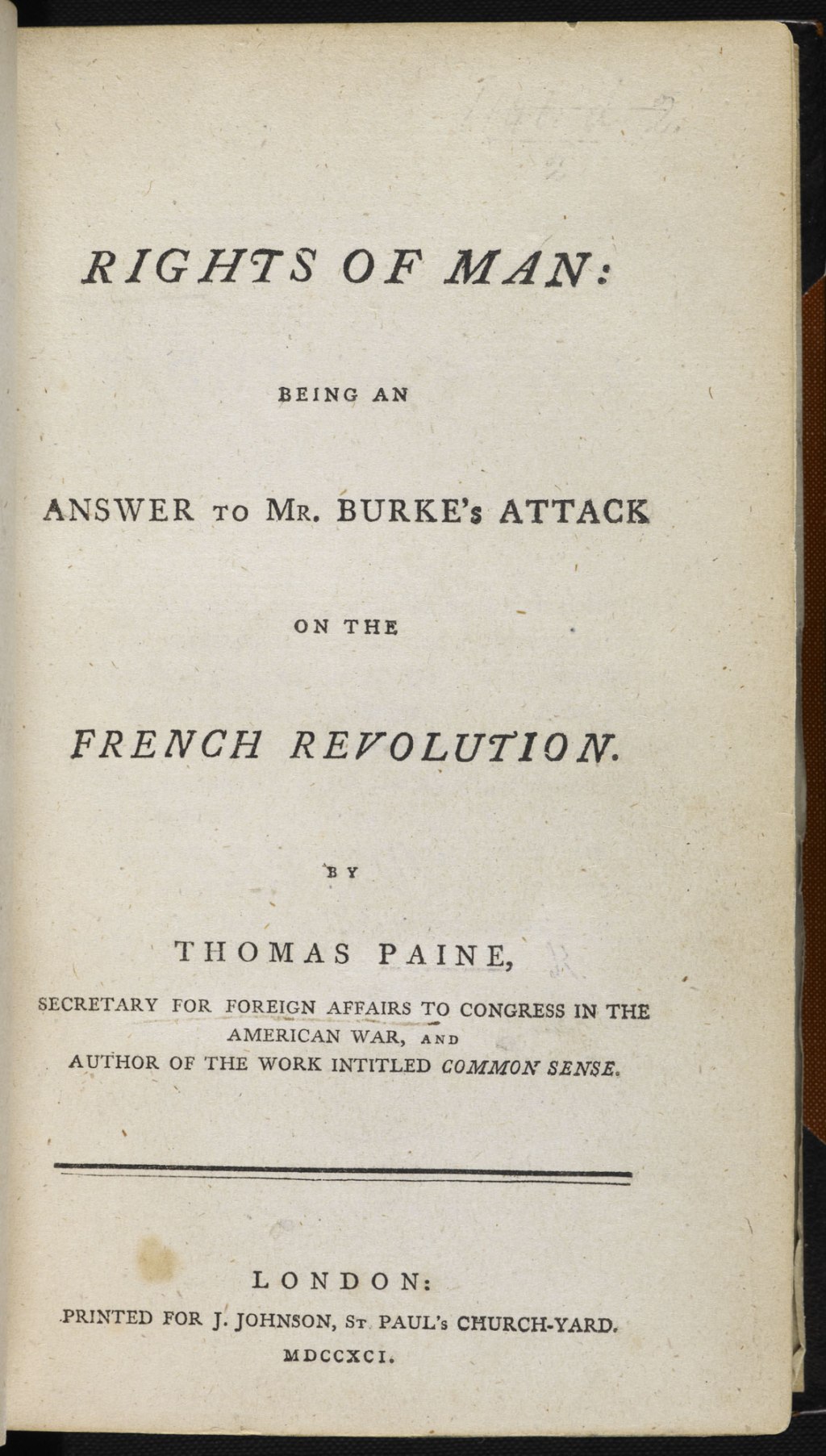
The Age of Enlightenment was also the Age of Revolution. America had declared its independence from Britain 14 years before Malone’s The Plays and Poems of William Shakespeare. The Haitian Revolution was a mere year away, and in the same year that Malone published his edition of Shakespeare, his friend Edmund Burke published his Reflection on the Revolution in France.17
Malone himself had ties to revolutionary figures in Ireland. He was friends with Henry Flood, an Irish Member of Parliament who was an outspoken opponent of English rule in Ireland. Malone briefly considered a political career before moving to London to continue his work as a scholar. Nonetheless, Malone remained a strong proponent of Irish Independence throughout his life.18 This revolutionary fervor is a further reflection of the Enlightenment ideals held by Malone.
Having now examined the texts and the men who created them, the last post will delve into the 20th-century reception of both Benson and Malone and the various viewpoints regarding their motivations.
Bibliography
1. Henry R. Plomer, A dictionary of booksellers and printers who were at work in England, Scotland, and Ireland from 1641 to 1667. (London: The Bibliographic Society, 1907), 22. https://www.google.com/books/edition/A_Dictionary_of_the_Booksellers_and_Prin/LPoXAAAAMAAJ?hl=en&gbpv=1&printsec=frontcover. 2. Josephine Waters Bennett, “Benson’s Alleged Piracy of ‘Shake-speare’s Sonnets’ and Some of Jonson’s Works,” Studies in Bibliography 21, (1968): 239. accessed December 15, 2022. https://www.jstor.org/stable/40371468. 3. Faith D. Acker, “Manuscript Precedents for Editorial Practices in John Benson’s Poems: Written by Wil. Shake-Speare, gent.” Shakespeare Quarterly 71, no. 1 (2020): 23. accessed December 15, 2022. https://www.muse.jhu.edu/article/798227. 4. Bennet, 243. 5. Hyder Rollins, A New Variorum Edition of Shakespeare – The Poems. (Philadelphia: J.B. Lippincott Company, 1938), 607. https://archive.org/details/in.ernet.dli.2015.262198/mode/2up. 6. Bennet, 246. 7. Aleida Auld, “Biographical Reconfigurations of Shakespeare’s Sonnets: John Benson, Charles Gildon, and the Catullan Epigram,” Shakespeare 18, no. 2 (2022): 199. https://doi.org/10.1080/17450918.2021.1973079. 8. David Baker, “Cavalier Shakespeare: The ‘1640 Poems’ of John Benson,” Studies in Philology 92, no. 2 (1998): 155. accessed December 15, 2022. https://www.jstor.org/stable/4174604. 9. Jane H. Ohlmeyer, “English Civil Wars,” last modified September 5, 2022, https://www.britannica.com/event/English-Civil-Wars. 10. “The Story of Theatre,” Victoria and Albert Museum, accessed December 15, 2022, https://www.vam.ac.uk/articles/the-story-of-theatre. 11. Bennet, 243. 12. Margreta de Grazia, Shakespeare Verbatim (Oxford: Clarendon Press, 1991), 3. 13. J.K. Walton, “Edmond Malone an Irish Shakespeare scholar,” Hermathena no. 99, (1964): 5. https://www.jstor.org/stable/23065272. 14. Walton, 14. 15. de Grazia, 5. 16. de Grazia, 3. 17. Matthew White, “The Enlightenment,” last modified June 21, 2018, https://www.bl.uk/restoration-18th-century-literature/articles/the-enlightenment#:~:text=The%20Enlightenment%20%E2%80%93%20the%20great%20’Age,the%20Napoleonic%20Wars%20in%201815. 18. Walton, 10.
A full bibliography can be found at https://editingshakespeare.com/2022/12/16/bibliography/
 Editing Shakespeare
Leave a comment